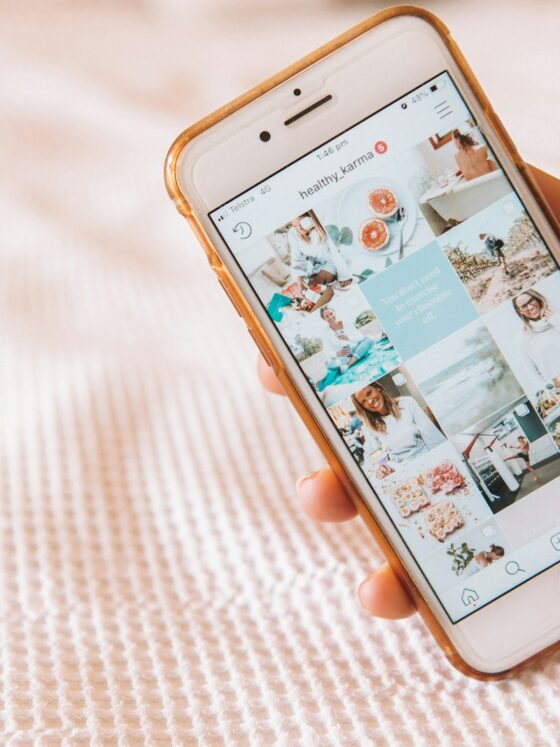
Let’s be real for a second: the word “influencer” can feel a little… cringeworthy. It conjures images of perfectly curated feeds, detox tea promotions, and a lifestyle that feels completely out of touch with reality. But behind the side-eye and the memes, it’s a term that has completely taken over our digital world, leaving most of us wondering, what does ‘influencer’ mean anymore? Is it your cousin with 800 followers who gets free coffee for a post, or is it a celebrity with a multi-million-dollar brand? The chaos is real.

Consider this your official, straightforward guide. We’re going to break it all down—from the different types of creators (yes, there’s a difference!) to how this is actually a real job with a real pay cheque. We’ll separate the social media stereotype from the day-to-day reality so you can finally understand the industry, figure out if it applies to you, and stop cringing every time you hear the word. Let’s get into it.
The Dictionary Definition vs. The Real-World Vibe
The other day, I found myself adding a ridiculously specific brand of chilli crisp oil to my online cart at 2 AM. Why? This was because a creator I follow on Instagram, who creates chaotic yet comforting “lazy girl” recipes, claimed that this particular brand of chilli crisp oil was her lifeline. Despite never having met her, I implicitly trusted her taste at that moment. And that, my friends, is influence in its purest, most unhinged 2025 form.
The term ‘influencer’ gets thrown around so much it’s almost lost all meaning. It conjures images of perfect people on perfect vacations, but the reality is so much more nuanced. So, let’s get into the real tea.
What the Dictionary Says (The Boring Part)
Let’s first address the theoretical aspects. Merriam-Webster defines an influencer as someone who “inspires or guides the actions of others.” Before social media, these were your magazine editors, celebrity chefs, or the fashion columnists who could make or break a trend. They served as gatekeepers of taste, disseminating their opinions from a position of authority. But that definition feels a little dusty now, doesn’t it? It’s missing the key ingredient: community.
What It Actually Means in 2025
So, what does ‘influencer’ mean in our chronically online world? Forget follower counts for a second. Today, influence is about cultivating a trusted, engaged community within a specific niche. It’s less about being a celebrity and more about being the go-to person for something.
whether that’s historical romance novels, vegan baking, or sustainable fashion. This deep-seated trust is the entire engine behind the multi-billion-dollar world of influencer marketing, where brands collaborate with these digital storytellers precisely because their audience listens.
From A-List Celebs to Your Niche BFF
Think about it. We’ve shifted from top-down celebrity endorsements to peer-to-peer recommendations. A glossy magazine ad with a TV star holding a perfume bottle feels corporate. It’s an advertisement, and we know it. But when a gaming creator you’ve watched for years unboxes a new headset and geeks out over the sound quality, it feels like a genuine tip from a friend. That recommendation just hits different because it’s rooted in shared passion and authenticity, not just a massive pay cheque.
It’s Not Just About Follower Count: The Types of Influencers
Okay, let’s get one thing straight: when you ask, “What does ‘influencer’ mean?” the answer isn’t just “someone with a bajillion followers.” That’s the social media version of reality, but the real-world vibe is way more nuanced. Getting fixated on a person’s follower count is akin to assuming that the loudest speaker is always the most persuasive. Sometimes, they’re just… loud.

Consider this: despite having only a few thousand constituents, a local mayor is well-versed in their community and capable of achieving local-level accomplishments. A national president has millions of citizens but a much broader, less personal connection. Neither is “better”—they just have different kinds of influence. The same goes for creators online, where a high engagement rate often hits differently than a massive follower number.
Nano & Micro-Influencers: The Community Kings and Queens
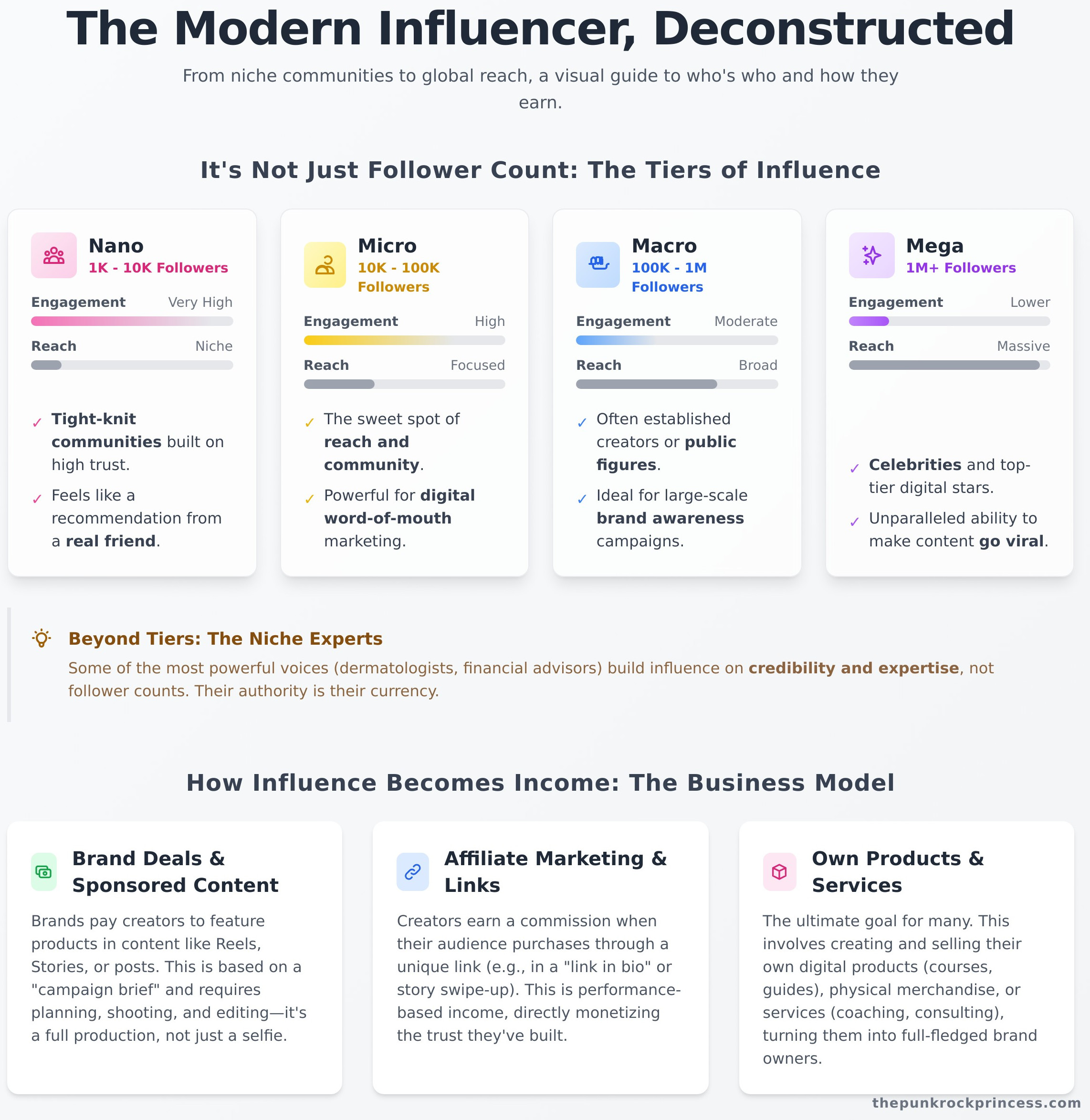
These are the creators with audiences typically ranging from 1,000 to 100,000 followers. Don’t let the term “micro” deceive you—their influence is immense. They cultivate tight-knit, niche communities built on trust and shared interests (think vegan home cooks or sustainable fashion lovers). Brands are obsessed with them because their recommendations feel like advice from a friend, making them the digital word-of-mouth that actually works.
Macro & Mega-Influencers: The Big Reach
Sitting at the top of the food chain, macro (100k-1M) and mega (1M+) influencers are often household names—celebrities, top-tier YouTubers, or public figures. Their strength is pure, unfiltered reach. Millions of people can view a single post, making them the preferred choice for big brands seeking widespread exposure. The trade-off? Engagement rates are typically lower, but their ability to make something go viral is undeniable.
Beyond the Tiers: Niche Experts & Thought Leaders
Then there are those whose credibility, not follower count, gives them influence. While the official dictionary definition of ‘influencer’ might focus on affecting purchasing decisions, some of the most powerful voices aren’t selling a thing. Think of the dermatologist on TikTok debunking skincare myths or the financial advisor on Instagram breaking down complex investing concepts. Their influence is earned through expertise, not aesthetics.
So, How Do Influencers *Actually* Make Money?
Let’s spill the real tea. The biggest misconception about influencers is that they just float through life on a cloud of free face cream and gifted activewear. While PR packages are a perk, they don’t cover the expenses. The reality is that being a successful influencer means being a business owner, a marketer, and a creator all rolled into one. The answer to ‘What does “influencer” mean in a business sense?’ is way more complex than just getting freebies.

Behind every effortless-looking Instagram post is a tonne of work: planning, shooting, editing, writing captions, negotiating contracts, and analysing data. It’s a full-blown job. Here’s a peek behind the curtain at the main ways creators turn their influence into actual income.
Brand Deals & Sponsored Content
This is the one everyone knows about. Brands pay influencers to create content featuring their products. But it’s not just a quick selfie. The brand provides a “campaign brief” (basically, the project assignment) outlining the goals, key messages, and the “deliverables” (the exact content required, like one Reel and three Stories). The real pros are picky, only partnering with brands that genuinely fit their vibe and values. Authenticity is everything, and their audience can smell a desperate cash grab a mile away.
Affiliate Marketing & Commission Links
Ever seen “link in bio” or someone swiping up to a product? That’s usually affiliate marketing. In simple terms, influencers earn a small commission if you buy something through their unique link. Tools like LTK or an Amazon shopfront make it easy to create shoppable posts. This is a performance-based hustle—they only make money if their recommendation genuinely convinces someone to buy. It’s a powerful way to monetise the trust they’ve built with their community.
Creating Their Own Products & Services
This is the final boss level of influencing: becoming the brand themselves. Many top-tier creators evolve from promoting other companies’ products to launching their own. Think about it:
- Custom merchandise or clothing lines
- Digital products like e-books, photo filters, or online courses
- Physical product lines, from coffee to cosmetics
This shift from promoter to entrepreneur is the ultimate power move, giving them full creative and financial control.
So when you’re trying to understand what ‘influencer’ means from a career perspective, think of them as a one-person creative agency. It’s a far cry from the simple definition of an influencer you might find online; it’s a multi-stream income business that demands serious strategy, negotiation, and a whole lot of grit.
The Good, The Bad, and The Cringey: Why ‘Influencer’ Is a Loaded Term
Let’s not sugar-coat it: the word ‘influencer’ can make you cringe. It often brings up images of tone-deaf Coachella posts, questionable diet teas, and a reality that feels… well, not very real. And honestly? The scepticism is valid. When your feed is a highlight reel of perfect lattes and sponsored holidays, it’s easy to forget there’s a whole lot of chaos happening just outside the frame. This disconnect is at the heart of why so many people are asking, ‘What does “influencer” mean anymore?’ and if it’s a title worth having.
The Authenticity Paradox
Here’s the real tea: audiences crave authenticity, but content creation is a business. That “candid” shot in a charming café? It might be part of a paid partnership that took an hour to shoot. This is the tightrope walk every creator has to navigate: being genuine while also paying the bills. It’s this very pressure that led to the rise of ‘de-influencing’, where creators push back against overconsumption and tell you what not to buy. It’s a direct response to the feeling that everything has become one big ad.
The Pressure Behind the Perfect Grid
Behind every aesthetically pleasing grid is a person juggling a lot more than you’d think. The reality of being an influencer often involves:
- The ‘Always On’ Mentality: Burnout is real. There’s immense pressure to constantly create, post, and engage with your community, leaving little room to just switch off.
- The Unseen Workload: For every 15-second Reel, there can be hours of filming, editing, answering emails, negotiating with brands, and planning content. It’s a full-time job and then some.
- Mental Health Toll: Constant comparison and exposure to negativity in the comments section can be a massive drain on your sanity.

Redefining the Role for the Better
But it’s not all doom and gloom. The future of influence isn’t about selling a perfect, unattainable life. It’s about connection. The best creators are redefining what ‘influencer’ means by using their platforms for good—whether it’s breaking down complex topics, advocating for social change, or simply building a supportive community where people feel a little less alone. It’s about leveraging a platform to create genuine value, not just to drive consumption. If you’re a brand that believes in building real connections, let’s talk about a collab!
So, what’s the final verdict on ‘influencer’?
Let’s not sugarcoat it: the word ‘influencer’ is loaded. It brings to mind everything from cringey product placements to genuine, life-changing recommendations. But after breaking it all down, we can see it’s not about the follower count or having a perfect grid. It’s about niche communities, authentic connection, and the trust that’s built one post, one story, and one honest review at a time. The real answer to ‘What does “influencer” mean today?’ is someone who has earned the attention and trust of a dedicated audience, no matter the size.
That focus on trust is the foundation of every successful collaboration. After years of navigating brand partnerships, getting featured in major publications, and building a highly engaged community that feels more like a group chat with friends, I’ve seen firsthand that authenticity isn’t just a buzzword; it’s the only thing that works. If your brand is ready to move beyond empty metrics and create something real, I’m your girl.