Let’s not sugar-coat it: building an influencer marketing strategy from scratch can feel like trying to solve a Rubik’s Cube in the dark. You know you should be doing it, but the whole thing is shrouded in chaos. Where do you even start? You’re haunted by visions of blowing your budget on the wrong person, sending a direct message that sounds like it was written by a corporate bot, and ending up with nothing but a few vanity likes as a result. It’s enough to make you want to throw your phone into the sea.

But what if it didn’t have to be that complicated? This is your no-BS guide to ditching the guesswork. We’re cutting through the jargon to give you a clear, step-by-step plan that actually works. Whether you’re a brand trying to find your perfect match or a creator looking to build authentic partnerships, you’ll walk away with the confidence to create campaigns that resonate and deliver a real return on your investment. Ready to stop guessing and start growing? Let’s get into it.
What the Heck Is Influencer Marketing Anyway? (And Why You Should Care)
Let’s not sugar-coat it: when you hear “influencer marketing”, you probably picture someone with perfect teeth unboxing a lifetime supply of skincare. And while that’s part of the highlight reel, it’s not the whole story. The social media version looks like a constant stream of free stuff and #ad posts, but the reality is a whole lot more strategic. At its core, it’s a modern take on word-of-mouth, where brands collaborate with people who have a dedicated, trusting audience. If you want the full-blown academic breakdown, Wikipedia’s deep dive on what influencer marketing is can sort you out, but we’re here for the no-BS version.
The real magic happens when you stop thinking about it as a one-off transaction (a post for a product) and start seeing it as relationship-building. It’s about finding creators whose audience genuinely trusts their recommendations. A single, random post is just noise; a well-thought-out influencer marketing strategy is about creating authentic advocacy that feels less like an ad and more like a hot tip from a friend. It’s about building trust, not just getting eyeballs.
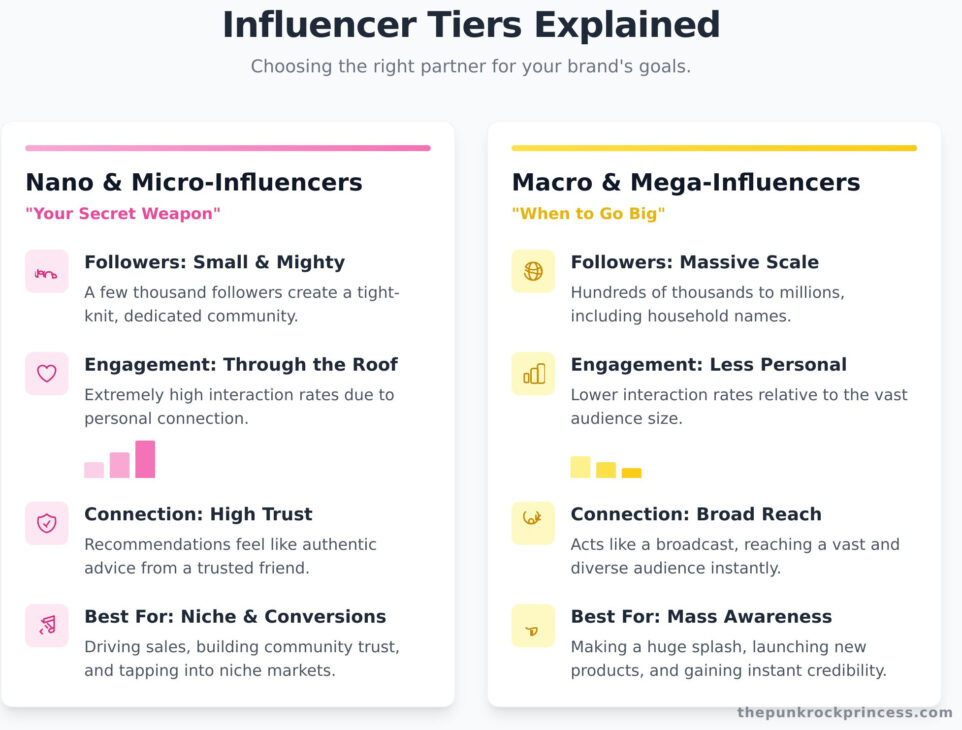
But not all influencers live in a Malibu mansion. They come in all shapes and sizes, and knowing the difference is key to not blowing your budget.
Nano- and Micro-Influencers: Your Secret Weapon
These are your cool, in-the-know friends with a few thousand followers who are obsessed with what they do. Think of a local food blogger whose followers will actually go to the restaurants she recommends. Their engagement often soars due to their genuine, personal connection with their community. Partnering with them is like tapping into a secret club where everyone trusts the leader.
Macro- and Mega-Influencers: When to Go Big
This is your A-list, red-carpet moment. These are the household names with millions of followers. Working with them is the fastest way to get massive brand awareness and instant credibility, like a Super Bowl ad for the Instagram generation. The catch? It comes with a Hollywood price tag and the engagement can feel less personal. It’s an effective strategy, particularly when you aim to create a significant impact.
Step 1: Setting Goals & Finding Your People (Without the Guesswork)
Let’s not sugar-coat it. Entering the world of influencer marketing without a clear goal is akin to embarking on a journey without a map, GPS, or fuel. You’ll invest a significant amount of time and financial resources, only to find yourself adrift. Before you even think about sliding into an influencer’s DMs, you need a plan. This strategy is the non-negotiable foundation of your entire campaign.

First, what’s the point? Seriously. Are you trying to get your brand’s name whispered in all the cool corners of the internet (that’s brand awareness)? Or are you trying to get people to click ‘Add to Cart’ like their life depends on it (that’s conversions)? You can’t build a solid influencer marketing strategy until you define your ‘why’, because it shapes every single decision you make next. You have to know who you’re talking to so you don’t just shout into the void.
Deciding on Your KPIs (It’s Not as Scary as It Sounds)
Key Performance Indicators (KPIs) are just a fancy way of asking, “How do we know if this is actually working?” A huge follower count may dazzle you, but it’s a classic vanity metric. A million followers who don’t care about your product are useless. Instead, focus on what matters:
- Engagement Rate: Are people actually liking, sharing, and having real conversations in the comments?
- Click-Through Rate (CTR): Are they clicking the link in their bio or your tagged product?
- Conversions: Did they use the discount code and actually buy the thing?
For your first campaign, set realistic goals. You’re aiming for a solid single, not a grand slam.
How to Find Influencers Who Don’t Suck
Now for the fun part: the treasure hunt. Forget expensive tools for a minute and go full-on detective mode. Start by searching hashtags and locations relevant to your brand. But the real pro move?
Look at who your target audience is already following and engaging with. As the team at Sprout Social explains, the first step is to set your goals and find your people, because this alignment is crucial. Check their comments are people having genuine conversations or just dropping fire emojis? The answer tells you everything.
Vetting 101: Spotting Red Flags
Not all influencers possess the same qualities. Some influencers have more skeletons (or bots) hidden in their closet than a haunted house. Here’s how to identify the warning signs before squandering your funds:
- Sudden Follower Spikes: Look at their growth. A suspicious spike of 50,000 followers overnight? Yeah, those were probably bought.
- Inauthentic Partnerships: Do they promote a different tea detox every week? If their past brand deals feel random, your partnership won’t feel genuine either.
- The Comments Are a Ghost Town: Look for real questions and back-and-forth. If it’s just a sea of “Great post!” from other bot-like accounts, run.
Step 2: The Outreach & The Offer (How Not to Be Cringey)
Okay, let’s talk about sliding into the DMs. Your first impression is everything, and nothing screams “I don’t care about you” louder than a copy-pasted message. Creators can spot a generic “Hey, babe, I love your feed! Collab?” a mile away. Let’s be real, that’s the fastest way to get left on read. A thoughtful, personalised approach isn’t just nice; it’s a non-negotiable part of a successful influencer marketing strategy. You’ve done the work to find the right person; don’t blow it now.

Crafting the Perfect Pitch Email
Ensure your pitch is concise and direct. Your goal is to start a conversation, not send them a novel. A killer pitch has three simple parts:
- Who you are & why them: Introduce your brand, but immediately pivot to them. Mention a specific post, video, or story you loved. Your recent reel on lazy girl meals was not only hilarious but also genuinely helpful, which shows that you have actually paid attention.
- The big idea: Briefly explain what you have in mind. “We’re launching a new line of sustainable coffee pods, and we think your morning routine content would be the perfect fit for a collaboration.”
- The clear call to action: End with a simple question. “Would you be open to hearing more?” makes it easy for them to say yes.
What to Offer: It’s Not Always About the Money
Let’s be clear: ‘exposure’ is not a legitimate form of payment. It doesn’t pay rent or buy groceries. Respect a creator’s work by making a fair offer. Most collaborations fall into three categories:
- Gifted: You send free products in exchange for an honest review or post. This type of collaboration is best suited for smaller creators or situations where the product value is high.
- Affiliate: The creator gets a unique code or link and earns a commission on sales. It’s a wonderful low-risk option.
- Paid: A flat fee for specific deliverables. This is the standard for established creators and the most straightforward part of any serious influencer marketing strategy.
The best offer often combines these like a payment plus a free product. It shows you value their time, creativity, and influence.
Nailing the Contract (Yes, You Need One)

Think of a contract less like a scary legal document and more like a roadmap that keeps everyone on the same page. It protects you AND the creator. It’s a sign of a professional partnership.
Make sure it clearly outlines everything to avoid any chaos later. Putting these details in writing can help you avoid the most common influencer marketing pitfalls, particularly when it comes to legal requirements such as disclosures. Your contract should cover deliverables (e.g., 1 reel, 3 stories), usage rights (can you use their content in ads?), deadlines, and payment terms.
Step 3: Co-create killer content and measure what matters.
Alright, let’s get into the good stuff. You’ve identified your ideal creator partner. What are the next steps? This section is where so many brands trip up. They either send a rigid, soul-crushing script or offer zero direction, which is just chaos. The goal here is collaboration, not dictatorship. Think of it less like hiring a talking billboard and more like producing a mini-movie with a director who already has a cult following.
Trust the creator. Seriously. They’ve spent years building a community that trusts their taste. If their content suddenly sounds like a corporate press release, their audience will smell it a mile away. The magic happens when your brand’s goals meet their unique creative voice. This partnership approach is the core of any successful influencer marketing strategy.
Building a Content Brief That Actually Helps
A good brief is a lifeline, not a cage. It gives the creator guardrails so they can drive creatively without going off-road. Rather than composing a verbatim script, provide them with the necessary components and allow them to piece it together. Your brief should be a one-pager that covers:
- The Big Goal: What are we trying to do? Drive sales? Boost brand awareness? Get sign-ups?
- Key Messages: Identify one or two essential points that must be communicated. (e.g., “It’s vegan and cruelty-free.”)
- The Vibe & Tone: Is this campaign funny, heartfelt, or educational? Give them the emotional direction.
- The Call-to-Action (CTA): Be crystal clear. Tell them exactly what you want their audience to do, like ‘Use code PRINCESS20 for 20% off!’
- Dos and Don’ts: Simple guidelines, like “Please show the product out of the box” or “Don’t mention our competitor by name.”
Tracking Your ROI (The Real Way)
Likes and comments may boost your ego, but they don’t generate revenue. To make your influencer marketing strategy sustainable, you need to track what actually matters. Forget vanity metrics and focus on the data that shows real impact. The easiest ways to do this are:
- Unique Codes & Links: Give each influencer their own trackable affiliate link or discount code. It’s the cleanest way to see who is driving actual sales.
- UTM Parameters: These are little tags you add to a URL that tell your Google Analytics exactly where your website traffic came from. A creator’s link can tell you not just that someone clicked, but that they came from *their* specific Instagram Story.
- Beyond the Likes: Pay attention to shares and, most importantly, saves. A ‘save’ means the content was so good that someone wants to come back to it. That’s gold.

Getting this part right turns a marketing expense into a measurable investment. Ready to partner up and create something that genuinely connects? Let’s talk about collaborations!
The Biggest Influencer Marketing Fails (And How to Avoid Them)
Let’s not sugar-coat it: influencer marketing can be a total minefield. For every brilliant campaign that feels like a genuine recommendation from a friend, there’s a cringey, mismatched ad that lives rent-free in our heads for all the wrong reasons. The difference? It usually comes down to avoiding a few classic, completely preventable blunders.
The biggest mistake is getting star-struck by a huge follower count. A million followers looks great on paper, but if their engagement rate is in the gutter, you’re basically shouting into the void. A creator with 10,000 super-engaged fans who trust their every word is infinitely more valuable.
This brings us to the next common mistake: neglecting your homework. Partnering with an influencer who doesn’t align with your brand is like setting up your vegan friend with a butcher. It’s just… not going to work. You have to deep-dive into their content, their vibe, and their audience’s comments to see if it’s a genuine match. A good influencer marketing strategy always prioritises alignment over audience size.

And once you find that perfect match? Please, don’t suffocate them. The fastest way to kill a campaign’s authenticity is by being too controlling. Handing a creator a rigid script turns them from a trusted voice into a robotic billboard. You hired them for their magic, so let them work it! Finally, the ‘we’ll just wing it’ approach is a recipe for chaos. Get everything in writing: deliverables, payment, deadlines, and usage rights. It’s not about being difficult; it’s about being professional.
The ‘One and Done’ Mistake
Think of influencer marketing like dating. A one-night stand (a single post) is forgettable. But a long-term relationship? That’s where the real trust and connection happen. Building genuine, long-term partnerships with creators turns them into true brand ambassadors who are invested in your success. It’s a slow burn that hits different and delivers way better results than a flash-in-the-pan ad.
Forgetting About Disclosure Rules
This isn’t just bad form it’s potentially illegal. The law is crystal clear: paid partnerships must be disclosed. In the US, the FTC requires clear and conspicuous markers like #ad or #sponsored. Trying to hide a partnership is shady, erodes audience trust, and makes both the brand and the creator look bad. Transparency is non-negotiable for any credible influencer marketing strategy.
So, what’s the bottom line?
Let’s not sugar-coat it: influencer marketing can feel like total chaos. But if there’s one thing to take away from this guide, it’s that a solid plan is your sanity-saving lifeline. Forget the guesswork and the cringey DMs that make everyone uncomfortable.
At the end of the day, a killer influencer marketing strategy isn’t about chasing vanity metrics or throwing money at the biggest names. It’s about setting clear, achievable goals, finding creators who genuinely connect with your brand’s vibe, and treating the whole thing like a true partnership not just a transaction. That’s how you create content that people actually want to see and avoid those epic fails.
As a creator, I’ve spent years on the other side of the pitch, building an authentic, engaged audience that trusts my no-BS approach. I know what works because I’ve lived it. If you’re a brand that values real connection over empty clicks and wants to build a partnership that gets results, maybe we should chat. Looking for PR or advertising? Let’s create something cool together.
Now go out there and build something that matters. You’ve got this.